Introduction
Plato (c. 427–347 BCE) was a Greek philosopher and one of the most significant thinkers in Western philosophy. He was born into an Athenian aristocratic family and was a student of Socrates and the tutor of Aristotle. Plato established the Academy in Athens, which is regarded as being one of the earliest institutions of higher learning in history. His writings, composed in dialogue form, contain a broad assortment of topics such as politics, ethics, metaphysics, epistemology, and psychology.

Plato (c. 427–347 BCE)
One of Plato's most essential philosophical contributions was his theory of Forms—the view that the material world is only an imitation of a more fundamental, eternal one. His greatest work The Republic outlines his idea of an ideal state and describes his theory of the tripartite soul. Throughout all his works, Plato was interested in learning about human nature, knowledge, and the psychology of the mind. His philosophical concepts would continue to influence centuries of thinking, not only influencing later philosophers but also early psychological thought.

Plato’s Theory of Ideas (Forms) and Its Psychological Implications
Plato theory of form ideas is the most significant concept that has influenced psychology and also various disciplines. He proposed that there exists an immaterial form that embodies that truth or essence of everything we perceive, which is beyond the physical world. He claimed that the actual reality lies in these unchanging abstract forms and the things we experience in the material world are imperfect copies.
Plato's theory has profound psychological implications in understanding how the human mind processes abstract concepts, forms ideas beyond sensory perception and engages in higher order thinking. The ideas align with the modern theories of cognition, abstraction and inert knowledge which explore how people develop understanding beyond major sensory experience and material world.
Plato argued that human knowledge is a process of recollection of eternal forms and not only derived from sensory experience according to him before birth of an individual the soul exist in the realm of forms which already has access to pure knowledge and once it enters the physical body of an individual it forgets the truth and is necessary to recollect them through learning and reasoning. Plato stresses that human knowledge is innate and not based on experience directly and this influences modern debates In cognitive psychology and study of intelligence.
Plato's Theory and the Development of Abstract Thinking
One of the core ideas of Plato's philosophy is that the mind can engage with abstract material concepts. This ability is Central to cognitive development. Abstract thinking allows humans to understand universal principle morals and logical reasons i.e to go beyond tangible experience. In psychology The theory of cognitive development by Jean Piaget identifies abstraction as a key milestone in human intelligence. According to him children progress through different stages of cognitive growth with the formal operational stage marking the ability to think abstractly and hypothetically.
This development process mirrors Plato's claim that true knowledge does not come from direct perception but from the mind's ability to recognise and reason higher truths. For example- When a child initially understands justice it may pursue justice as just a simple concept but over time they develop a more abstract understanding of justice as an ideal principle that is similar to Plato's description of the form of justice.
Further the ability of an individual to engage in metacognition supports the idea that human intelligence is not just restricted to sensory data but more than it.
Concept Formation and Thinking Beyond Sensory Perception
Plato's argument that true knowledge is independent of sensory experience is closely related to concept formation in psychology. The process of categorising and organising experience into mental models is a fundamental cognitive function. For example- when a person looks at different types of dogs they recognise and understand that they all belong to the same category despite of variation in size ,colour, breed etc .This is the ability to identify patterns and generalize, so this example suggest that our mind operates on abstract principle rather than just sensory input.
Modern psychology supports this idea through research in cognitive schemas and prototype theory studies that people do not store individual images of every object they encounter but instead developed generalized mental representations. This alliance with Plato’s belief that mind pursues the world by relating imperfect objects to their ideal forms. Linking Plato’s ideas to modern theories of cognitive and innate knowledge Plato has influenced many rationalist thinkers like Descartes and Kant by emphasizing on innate knowledge who also argue that some ideas exist independently of experience in psychology; the debate between empiricism and nativism continues today.
 |
| Mind-Body Dualism |
Several psychological studies support Plato’s will that the mind possesses pre existing structure for knowledge:
1. Infant cognition research by Elizabeth Spekle shows that newborns without any prior learning have an understanding of physics such as object continuity and permanence . He suggests that some cognitive abilities are in it much like Plato's ideas of recollecting the forms.
2. Chomsky's theory of universal grammar is similar to Plato’s belief that we already have free existing knowledge that only needs to be recalled and argues that all humans are born with inherent ability to understand language structures .
3. Cognitive psychologist studies on pattern recognition reveal that people without experience can recognise abstract concepts reinforcing Plato’s argument that the mind grabs universal truth beyond Mere perception.
Plato's theory of form gives as a powerful framework for understanding how the human mind engages with abstract concepts, forms knowledge and processes information beyond sensory perception. This idea that knowledge exists independently of experience has a very strong connection to modern cognitive psychology. We can see the transition from concrete thinking to abstract reasoning Piaget's cognitive development stage is similar to Plato's description of journey from sensory perception to intellectual enlightenment
Mind-Body Dualism
Humans have both physical properties and mental properties. physical properties include size, weight, shape, colour, motion through space and time, etc. and mental properties which involve consciousness including perceptual experience and emotional experience. This leads to questions like - what is the relationship between mind and body? Or alternatively: what is the relationship between mental properties and physical properties?
The word materialism has been used in modern times to refer to a family of metaphysical theories (i.e., theories of the nature of reality) that can best be defined by saying that a theory tends to be called materialist if it is felt sufficiently to resemble a paradigmatic theory that will here be called mechanical materialism. Materialistic perspective emphasises on approaches like Behaviourism, functionalism, mind-brain identity theory and the computational theory of mind to explain Mind. The most common factor in such theories is the attempt to explicate the nature of mind and consciousness in terms of their ability to directly or indirectly modify behaviour.

Whereas Idealistic approach is any view that stresses the central role of the ideal or the spiritual in the interpretation of experience. It may hold that the world or reality exists essentially as spirit or consciousness, that abstractions and laws are more fundamental in reality than sensory things, or, at least, that whatever exists is known in dimensions that are chiefly mental—through and as ideas. the two basic forms of idealism are metaphysical idealism, which asserts the ideality of reality, and epistemological idealism, which holds that in the knowledge process the mind can grasp only the psychic or that its objects are conditioned by their perceptibility.When Both physical and mental events determine behaviour it is called dualism. The term ‘dualism’ has a variety of uses in the history of thought. For some particular domain, there are two fundamental kinds or categories of things or principles. In dualism, ‘mind’ is contrasted with ‘body’, but at different times, different aspects of the mind have been the centre of attention. In the classical and mediaeval periods, it was the intellect that was thought to be most obviously resistant to a materialistic account: from Descartes on, the main stumbling block to materialist monism was supposed to be ‘consciousness’, of which phenomenal consciousness or sensation came to be considered as the paradigm instance.
Plato asserted a psychophysical, mind-body dualism. In other words, human entities: mind and body. Only a rational soul or mind can contemplate true knowledge, whereas the lesser part of the body is limited to imperfect contributions of sensations.
Plato viewed the interaction between people and their environment as a critical factor in understanding human activity. According to Plato, we deal with the environment through our senses, and this body-dependent type of knowledge forms one aspect of his mind-body dualism. However, this bodily level of sensory knowledge is primitive, distorted, and unreliable, Thus he rejected the Sophists' doctrine of the value of sense knowledge, arguing instead that the influx of sensory data gives us a percept, which he defined as a unit of information about the o environment and subject to much flux.
The mind is about mental processes, thoughts, and consciousness. The body is about the physical aspects of the brain-neurons and how the brain is structured. The mind and body was1st understood as running parallel tracks and then only was the idea of their interaction. One implication of this approach is that although the two entities are autonomous neither one can be fully and adequately understood without considering the impact of the other entity on it. The source, the triggers, the manner of operation, the outcomes, and the manifestations of the two kinds of impact―of body on mind and of mind on body―are expected to differ in various respects. However, although it is rarely stated explicitly, both kinds of impact are assumed to be equally potent and important. One implication or result of this kind of thinking is the tendency to consider the interacting entities as not simply structures but as systems.
Plato proposed that the soul consists of three parts: the rational (reason), the spirited (will/emotion), and the appetitive (desires). This model suggests that psychological conflict arises from the interactions between these parts, influencing behavior and moral decision-making.
Plato believed in the existence of innate ideas, suggesting that knowledge is not solely derived from sensory experience but is instead a process of recollection of what the soul already knows. This concept has implications for understanding human cognition and learning.
While viewing these implications it is found that Plato's contrast between sensory knowledge and rational knowledge reconciled the opposing conclusions of the naturalists Heraclitus and Parmenides regarding change in the world.
Heraclitus proposed a view of human activity consistent with naturalistic orientation. Specifically he searched for a single unifying principle or substance that could explain the nature of change and permanence was Fire. Plato's view of sense knowledge accommodates Heraclitus' position on flux, whereas Parmenides' assertion about changeless unity also found support in Plato's notion of rational knowledge. Parmenides argued that changes in the world and all motion are superficially observations and distortions of our senses. Rather, the basic fact of nature is its permanence and immobility, which bring unity and form the basis of life.

The Role of the Soul in Knowledge and Behavior
Science and philosophy, as proposed by Plato, are built on ideas rather than specific concrete objects. Plato believed that ideas are our sole sense of reality and senses are just representations of ideas. Ideas are mobilized by the soul, an agent that forms and stores ideas. One of Plato’s contributions was in identifying the role of the soul in knowledge and behaviour. According to Plato, the soul had a rational part situated in the head, and an irrational part situated in the body. He identified desire as the motivational factor of the soul. The soul performs two functions: (1) developing intuitive knowledge and understanding through pure intellect, and (2) forming opinions based on bodily interactions with the environment. These activities give rise to beliefs.
Plato proposed a tripartite theory of the soul differentiating humans from other species. (1) Nutritive / Appetitive Soul, also known as Epithymetikon, focuses on the desires for physical pleasures such as food, water, sex and material wealth. When this soul dominates, behaviour becomes impulsive and indulgent leading to chaos and injustice. (2) Sensitive / Courageous Soul, also known as Thymoeides, focuses on the emotional aspect of individuals such as anger, courage and ambition. When this soul dominates, behaviour either follows a virtuous conduct or turns into aggressive actions. (3) Rational Soul, also known as Logistikon, focuses on the formation of ideas leading to rational thought. This process leads to order and symmetry leading to logical decision-making. When this soul dominates, behaviour is guided by rationality and virtue leading to justice and harmony.
A connection can be formed between Plato’s views on the soul and various modern psychological theories. Freud’s concept of motivation stems from his psychoanalytic theory of id, ego and superego. Id refers to the pleasure principle that represents the primitive instincts and unconscious desires of hunger, sex and aggression. It emphasizes on immediate gratification of desires without considering morality. Ego refers to the reality principle that represents the strive to satisfy the id’d desires through socially acceptable methods. It acts as a mediator between the id’s desires and the superego’s moral constraints. Superego refers to the morality principle that represents the societal norms and moral standards learnt through interactions. It plays the role of the conscience generating feelings of guilt or pride depending on its adherence to norms. Plato’s concept of Appetitive Soul can be related to Freud’s concept of Id in terms of primitive desires, Sensitive Soul with Ego in terms of emotional motivation and Rational Soul with Superego in terms of reflective processes.
Strack and Deutsch’s reflective-impulsive model identify’s human behaviour as the interaction of reflective and impulsive systems. The reflective system relies on knowledge about facts and values to make decisions. It processes information in a logical and goal-oriented manner and is disrupted by distractions or high emotional arousal. The impulsive system relies on associative links and motivational orientations triggered by stimuli or habits. It requires minimal effort and is not affected by low levels of stress and low self-control. Plato’s idea of reason affecting behaviour can be connected to this model. The concept of reason arising from rational calculations mirrors his rational soul and the concept of responses triggered by associative networks mirrors his appetitive soul.

Plato's Concepts of Sleep and Dreams
Plato discussed the condition of sleep and dreams in his books The Republic and Timaeus, and his was more of a philosophical account rather than a scientific explanation. Plato was of the belief that dreams have a close link with man's soul, morals, and sagacity.
The Function of the Soul in Dreaming
According to Plato, human souls consist of three components:
Rational (Logos) – The logic and rational side.
Spirited (Thymos) – The emotion and volition side.
Appetitive (Epithymia) – The bodily and desire-based aspect.
While asleep, the rational aspect of the soul is inactive, and the appetitive and emotional ones take over. This is why dreams tend to be irrational, emotional, or based on concealed desires. According to Plato, a man's dreams can also provide indications about his inner self since they convey thoughts and desires that, in waking life, are repressed.
Dreams as a Measure of Moral Character
In The Republic (Book IX), Plato speculated that dreams could be symbolic of an individual's moral training or lack thereof. According to him, if an individual is virtuous and has self-control in the day, his dreams will be calm and orderly. But if an individual experiences strong desires or evil thoughts during the day, these tendencies will manifest in his dreams in the form of disordered, uncontrolled images.
Plato even spoke of a situation where, in sleep, one might allow oneself fullest rein to one's worst impulses—violence, greed, or lust—since the rational element of the soul is absent to restrain them. He took this as evidence that self-control was needed to maintain waking and sleeping life in balance.
Dreams as a Means to Knowledge
Plato's anamnesis (recollection) theory suggests the pre-existence of the soul and inborn knowledge. Plato believed that dreams could be glimpses of such knowledge because the rational faculty is not dominant when one sleeps. Dreams therefore had the capability to serve as the intermediary between the material and the higher realm of truth.
This idea is analogous to later psychology ideas, such as Freud's argument that dreams reveal hidden aspects of the unconscious mind.
Sleep and the Body's Balance
In Timaeus, Plato even explained the body processes of sleeping. According to him, the natural heat in the body, when it gets withdrawn into internal organs, causes the person to become insensible to sense perceptions. For Plato, a rightly balanced body and soul bring one to peaceful sleeping, but imbalanced living begets disturbed sleeping and evil dreams.
Therefore, Plato's philosophy of dreams and sleep was more profound, connecting them to wisdom, the soul, and morality. His work influenced subsequent mind theories, such as Aristotle's and even contemporary psychologists like Freud and Jung. While they were not scientific in nature, they helped form early discussions on dream interpretation and its relation to mankind.

Plato’s Influence on Cognitive Development
Plato was one of the earliest philosophers to lay the groundwork for understanding human behavior and the psyche. His philosophical works, especially The Republic, offer insights into the nature of the soul, rationality, and morality, which still resonate in psychological discussions today.
In the famously stated Reminiscence Theory of Knowledge, it is understood that all knowledge is innate and can be attained only through introspection attuning with one’s soul, which is the searching of one’s inner thoughts and cognitions. He further explained that sensory experiences aren’t autonomous and only serve as reminders for the knowledge that exists innately in each person’s psyche. Therefore, for Plato, all knowledge comes from reminiscence, from remembering the experiences the soul had before entering the body and from the bodies of previous lives, proving the soul's immortality.
A similar parallel can be drawn in modern cognitive science, where Piaget had stated that children’s cognitive ability need not stem from experience or teaching alone but can actually actively construct their comprehension of the world, instead of just being passive recipients. Albeit he didn’t support the innateness of knowledge, he did incline with the fact that cognitive experiences aren’t determined by sensory experiences alone.
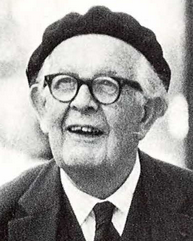 |
| Jean Piaget |
Plato also believed that learning is a form of recollection of pre-existing knowledge and stressed that mental operations as such are means of arriving at the truth or being rational, and that the truth ultimately arrived at was innate inborn proving to be a nativistic theory.
We can see the roots of cognitive psychology in Plato, modern science agrees that the brain has certain predispositions when exhibiting certain behaviour. Chomsky believed that language learning capabilities are hardwired into the brain and not fully learnt externally. Additionally, Plato’s belief in the immortality of the soul offers an early perspective on memory and learning. His idea foreshadows psychological discussions on memory retention and retrieval.
Modern psychology owes much to Plato’s analytical methods and conceptual models:
His dialectical method influenced psychotherapy and cognitive restructuring techniques.
The tripartite soul prefigures personality theories that classify human traits and behaviors.
His idea of forms reflects cognitive psychology’s emphasis on mental constructs and schemas.
Plato's philosophy also underscores modern discussions about free will, consciousness, and moral decision-making. The crux of the Platonic theory can be beautifully interpreted in this way, at its highest level the processes of the human soul permit the formation of ideas in the intellect, leading to achieving truth or rational thought. Thus, the soul provides the order, symmetry, and beauty of human existence. Although the presence of soul itself is questioned in the current era, there is still a symmetry, an innateness to cognitions that align with Platonic theories, proving him to be the pioneer of thought he is.
Politics and Human Nature: A Psychological Perspective
From ancient Greece to modern politics, Plato's philosophy continues to influence debates over human nature, governance, and social order. His writings, especially The Republic, offer a view of human nature which highlights the need for societal structures to direct people's lives towards the good. This point of view aligns with that of social psychology, which tries to find out how people act within a society and how societal structures affect moral development of an individual, group functioning, and governance. By looking at Plato's skepticism regarding human nature and his belief in maintaining order in society, we can learn about the psychological aspects of political philosophy and why it remains significant today.
Plato's Skepticism of Human Nature and Its Parallels with Social Psychology
Plato was convinced that if left to itself, human nature would result in chaos and injustice. His skepticism reflects in social psychological studies of human behaviour, especially conformity, authority, and moral reasoning studies.
The Stanford Prison Experiment (Zimbardo, 1971) which involved randomly assigning 24 male college students to the roles of guards and prisoners showed how quickly people put in positions of power(guards) or subordination(prisoners) can develop corrupt or submissive habits. The “guards” soon became authoritative and abusive resulting in the experiment being stopped after only 6 days. Plato’s belief that unrestrained desires result in the decline of society is seen here, where there was no moral supervision and people developed authoritarianism.

Stanford Prison Experiment
Milgram's Obedience Study (1961) where participants were instructed by an authority figure to use electric shock on learners(an actor) showed that people are likely to follow orders from authority figures, even when ordered to inflict harm on others. This aligns with Plato's view that without reason and morality (in the form of the philosopher-king), societies are likely to fall into tyranny.
 |
| Stanford Prison Experiment |
Milgram's Obedience Study (1961) where participants were instructed by an authority figure to use electric shock on learners(an actor) showed that people are likely to follow orders from authority figures, even when ordered to inflict harm on others. This aligns with Plato's view that without reason and morality (in the form of the philosopher-king), societies are likely to fall into tyranny.
Milgram's Obedience Experiment
Cognitive Biases and Decision-Making: Research has shown that humans are susceptible to groupthink, confirmation bias, and moral disengagement, further supporting Plato's view that most people are led by their basic needs(appetite soul) rather than reason.
The Role of Social Structures in Shaping Human Behaviour
Philosopher-Kings (Rational Soul): The ruling elite, led by wisdom and virtue.
Guards (Courageous Soul): The warriors, responsible for maintaining order and upholding justice.
Slaves and Workers (Appetitive Soul): The working class, who are in charge of material necessities and maintaining economic stability.
This division is similar to the modern psychological understanding into human motivation and social organisation, particularly Maslow's hierarchy of needs, which states that people seek to satisfy physiological and safety needs before moving on to self-actualisation. Plato's strict societal structure highlights the need for a structured government to maintain the moral and intellectual growth of its citizens, as does the present legal and educational system, to regulate behaviour and inculcate basic civic values.
Psychology's Contribution to Understanding Governance and Morality
Plato's views on government and human nature are well supported in modern psychology, especially in moral psychology and political psychology:
Moral Development (Kohlberg's Stages of Moral Reasoning): Lawrence Kohlberg built on Plato's work by stating stages of moral development, in which people move from morality based on self-interest (similar to Plato's appetitive soul) to abstract, principle-based moral reasoning (similar to the rational soul).
Political Psychology and Populism: Plato was against democracy since he believed that charismatic leaders have the ability to manipulate public emotions. Political psychology studies find that individuals tend to be influenced more by emotional appeals, group identity, and cognitive biases than by rational thought.
Plato's perspective on human nature as flawed yet open to rational thought continues to be an effective model for the study of political psychology. Though modern society may not accept Plato's rigid structures, his observations on the interaction between human nature and political structure remain an important topic to debate on regarding governance, social psychology, and morality.
As we encounter the political issues of today, reading Plato's philosophy from a psychological perspective offers insight into how societies work—and how they can be made to work better.


No comments:
Post a Comment